

Rate Markets Update · Wednesday, March 11, 2026
Rates Drift Higher as Market Monitors War Developments
- Traders Ignores Outdated CPI Data
Flash Update: US RATE MARKETS – WEDNESDAY MARCH 11, 2026
UST yields and SOFR swap rates are ticking higher as the market ignored “as expected” CPI data released this morning
As the conflict intensifies, the Middle East war remains the primary market catalyst
Growing fear that the Iran war will lead to prolonged global production disruptions and sustained higher oil prices is resulting in dramatically higher inflation expectations
The market reaction to the SCOTUS “tariff ruling” has been largely muted as traders await more details and information
Traders will continue to track volatile equity markets, specifically the technology and AI sectors
Market participants will continue to monitor developments with the DOJ investigation into the US Central Bank
The next FOMC rate decision is due Wednesday, March 18, 2026 at 2:00 PM
Fed officials will be in the pre-meeting communications “quiet period” until March 19th
Next up for key data: January PCE, Personal Income and Personal Spending data print on Friday, March 13, 2026 @ 8:30 AM
Short-end SOFR swap rates are trading up ~2-4 bps this morning, depending on tenor
Long-end SOFR swap rates are currently up ~2-3 bps, depending on tenor
Good Morning – US Treasury yields and SOFR swap rates are drifting higher again this morning, as turmoil in the global energy markets continues to fan concerns inflation will increase significantly. Oil prices also ticked higher again this morning, mainly due to conflicting messages from US officials about the potential duration of the war, and the overall war ‘objective’. Hopes for a quick resolution to the conflict are dimming, leading to speculation that oil and natural gas production could be disrupted for a sustained period of time. That is leading to higher oil prices and higher rates.
An “as expected” February CPI print did little to quell rising inflation fears. Basically, the CPI data was mostly ignored by the market – traders have bigger fish to fry at the moment! MoM and YoY headline and core CPI data were in line with expectations. Traders were hopeful that CPI would come in under expectations, which may have helped to alleviate some of the current fear surrounding the war-related potential for dramatically higher inflation.
From my perspective, the market is still trading with the view that the war will be transient – I am still surprised rate volatility has not surged even more than it has. The longer the war drags-on, the worse it will be for rates. As we know, the conflict continues to intensify. The news is coming fast and furious, so I expect the market to continue to be headline driven this week.The war in the Middle East is likely to remain the primary market catalyst until it is resolved, and resolved decisively. As such, uncertainty surrounding the duration, intensity and impact of the conflict remains extremely elevated.
Market participants will continue to nervously monitor the latest war developments. The underlying market fear is that the conflict in the Middle East will lead to a full-blown “energy crisis”, where global production is severely impacted and oil prices surge for a sustained amount of time. So far, the outlook is not encouraging. There is also a growing threat of stagflation – the war could impact global economic growth and lead to higher inflation. Stagflation would make the Fed’s job even more challenging.
There is definitely the possibility for whip-saw movements in rates this week, and I anticipate volatility will remain at elevated levels. Rates are likely to be biased higher until the oil market stabilizes.
News the market is tracking includes:
Geopolitical developments continue to weigh on market sentiment.The US/Iran “war” will likely dominate market sentiment this week. The end result of the US attack on Iran is difficult to forecast at this time. Currently, the major impacts thus far have been higher oil prices, higher rates, and a surge in geopolitical tensions.
SCOTUS is also currently ruling on the legality of the President firing of the Fed’s Lisa Cook. There are some reports stating that SCOTUS is nearing a final decision on that case, which could have far reaching implications for the US Central Bank.
The US Justice Department investigation into the US Central Bank and Chairman Powell will remain a key market focus moving forward.
Market participants continue to closely track developments in the US equities markets. There is still a sharp focus on the performance of the growing AI sector. Market sentiment is likely to be impacted by “tech” earnings for the foreseeable future.
The market continues to monitor US political developments. Traders are watching for signs of another potential government shutdown. US political developments will remain front-and-center for the market for the foreseeable future.
Traders and investors continue to assess the market implications of the recent SCOTUS ruling on President Trump’s tariffs. Market participants await more data and information.
SOFR Swap Rate Summary: The 1Y SOFR swap rate is trading up ~2-3 bps this morning. 2Y and 3Y SOFR swap rates are currently trading up ~3-4 bps. 5Y and 10Y SOFR swap rates are trading up ~2-3 bps on the day. The very back-end of the swap curve is currently trading up ~2-3 bps from yesterday’s closing levels. Expect increased levels of rate volatility today.
Please note: Market levels can change rapidly – rate cap premiums are subject to a dynamic market that can change frequently.
CHART 1:US RATES SNAPSHOT: 9:45 AM Eastern
*For SOFR Swap Rates & Change-On-Day (In Bps): Refer Two Far Right Columns (SOFR Swap Rates)
UST YIELDS | SWAP SPREADS | SOFR SWAP RATES
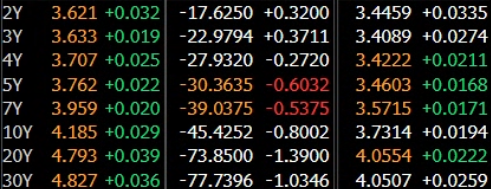
Source: Bloomberg, LLP | 9:45 AM NY Rates Snapshot
CHART 2, 2A & 2B: SOFR SWAP RATES DRIFT HIGHER AS MARKET PARTICIPANTS NERVOUSLY MONITOR WAR DEVELOPMENTS
SOFR swap rates are ticking higher again this morning as the war in the Middle East intensifies. Rates are moving higher as energy market led inflation fears continue to dominate the market. Short-end SOFR swap rates have broken out of the recent trading range due to reduced Fed rate cut expectations and war-related inflation fears. Longer-term swap rates have also moved higher on inflation fears, but are still trading just within the recent range.
I expect rates to remain asymmetrically biased higher as long as “oil fears” dominate the market. The 2-year SOFR swap rate closed at 3.21% on Friday 2/27 – it is currently trading at ~3.445% (+23.5 bps). The 10-year SOFR swap rates has experienced a similar move – it closed Friday night at 3.52% and is currently trading at ~3.73% (+21 bps).
CHART 2:Short-End SOFR Swap Rates – Prior 30 Days
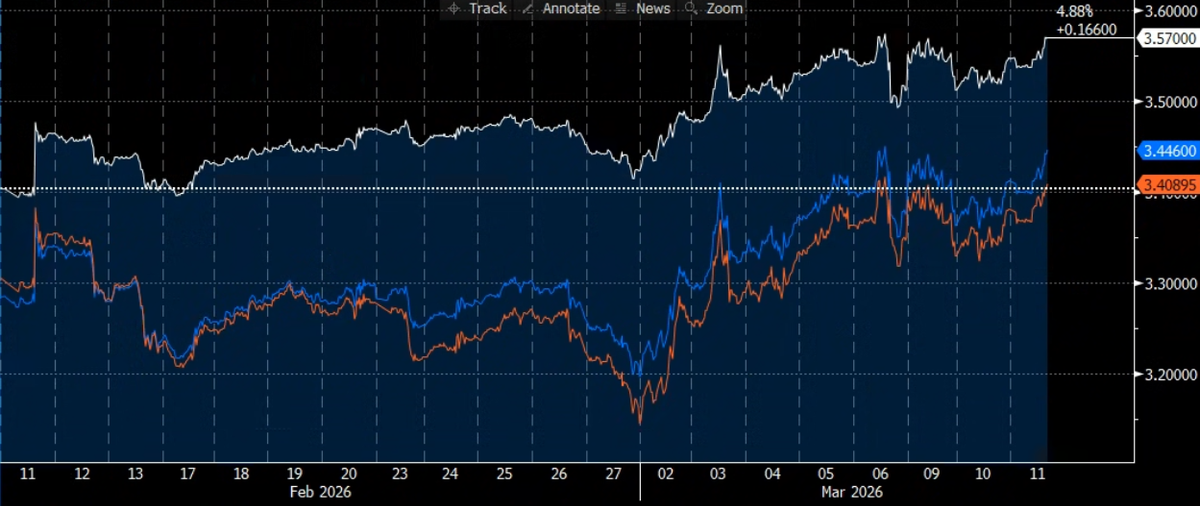
Source: Bloomberg, LLP | 1Y (white), 2Y (blue) & 3Y (orange) SOFR SWAP RATES, PRIOR 30 DAYS
CHART 2A:Long-End SOFR Swap Rates – Prior 30 Days
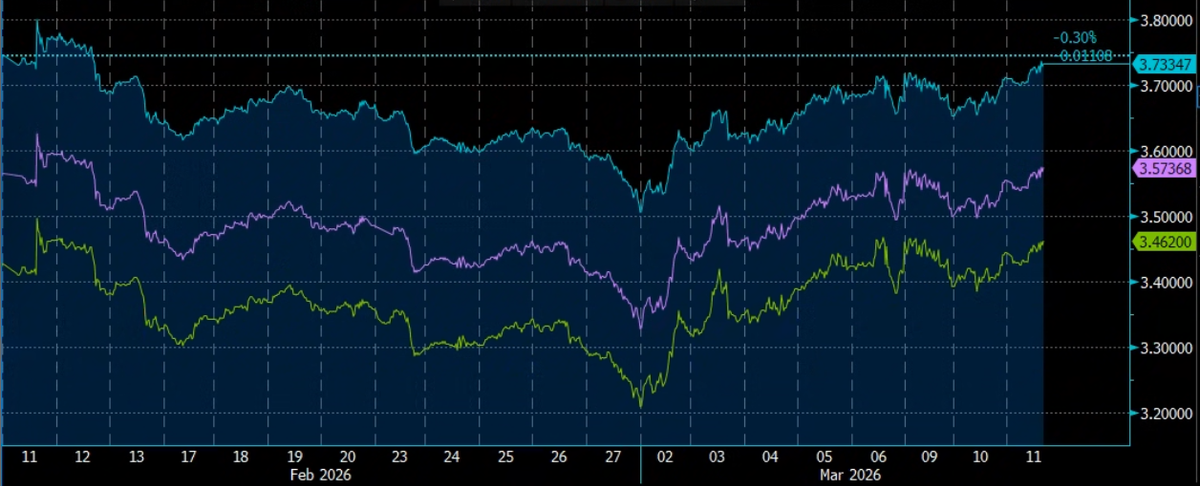
Source: Bloomberg, LLP | 5Y (green), 7Y (purple) & 10Y (light blue) SOFR SWAP RATES, PRIOR 30 DAYS
CHART 2B:3-Month SOFR Futures Reflect Reduced Fed Rate Cut Expectations
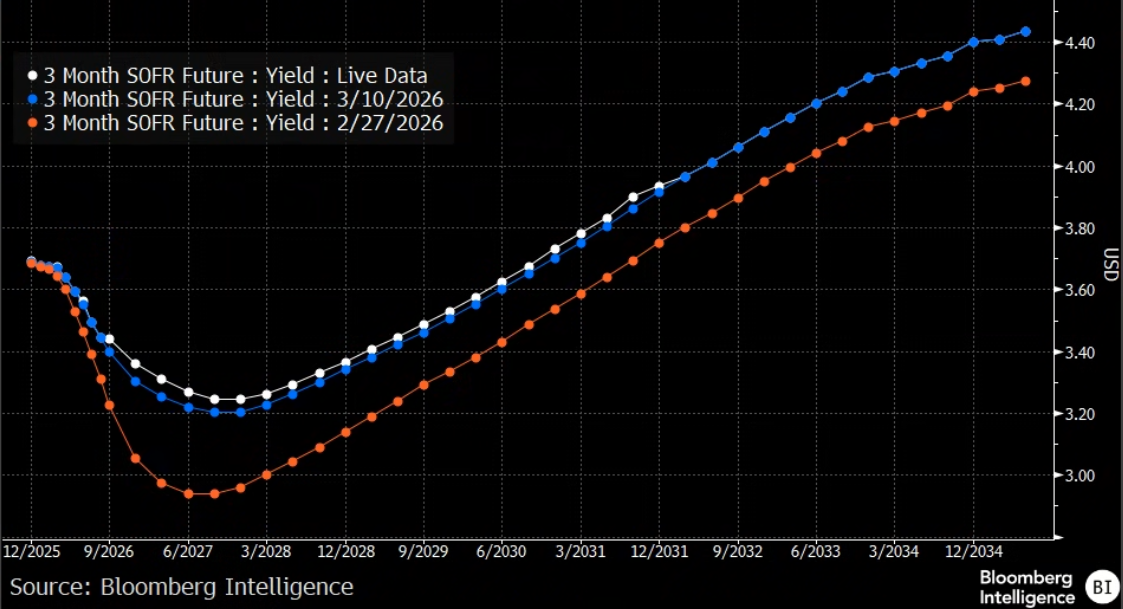
Source: Bloomberg, LLP | 3M SOFR FUTURES THROUGH 2034
CHART 3 & 3A: GLOBAL MARKETS REMAIN LASER-FOCUSED ON ENERGY MARKETS
Oil prices moved higher again this morning in extremely volatile trading, as traders weigh growing disruptions to Middle East supplies and a potential emergency release of global oil reserves. The International Energy Agency (IEA) is proposing an unprecedented release of 300 million to 400 million barrels, with a possible decision later on Wednesday when leaders of the “Group of Seven” most developed nations meet. The conflict in the Middle East has drawn more than a dozen countries into the conflict and has sparked increasing concerns about a global inflation crisis. Rates are likely to remain biased higher until the turmoil in the energy markets abates.
CHART 3: Oil Price Volatility Soars As Middle-East War Drags On
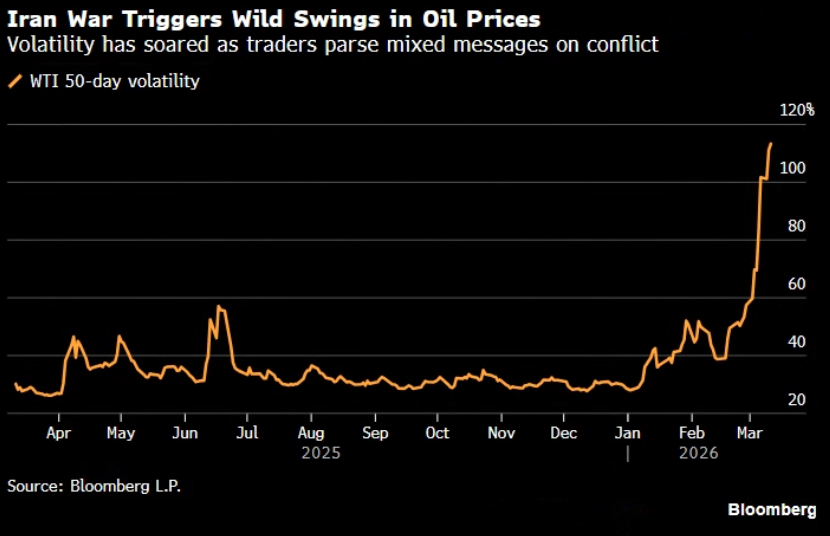
Source: Bloomberg, LLP | WTI CRUDE OIL 50-DAY VOLATILITY
CHART 3A:Crude Oil Prices Remain Extremely Volatile
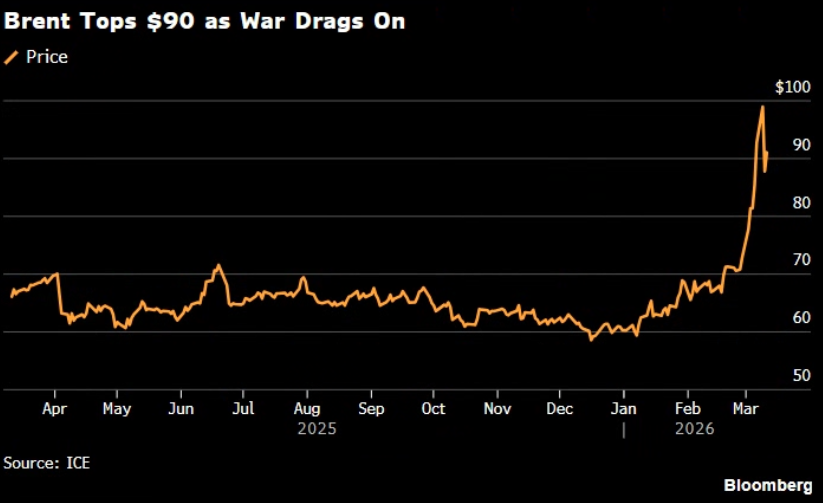
Source: Bloomberg, LLP | BRENT CRUDE OIL PRICES SINCE APRIL 2025
CHART 4 & 4A: FEBRUARY CPI RECAP
Underlying US consumer inflation slowed in February from a month earlier, suggesting price pressures eased prior to the war with Iran. Core CPI, which excludes more volatile food and energy pricves, rose 0.2% MoM. Year-on-year core CPI was unchanged at 2.5% — the slowest pace in nearly five years. Headline CPI advanced 0.3% from January and 2.4% from the prior year – both were as expected.
CHART 4: CPI Recap – Increase In CPI In-Line With Expectations
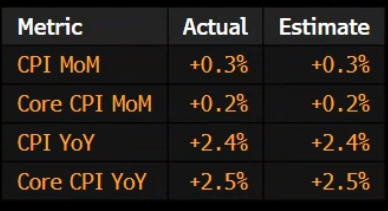
Source: Bloomberg, LLP | FEBRUARY CPI RECAP
CHART 4A: Core CPI Cooled In February, But Traders Shrug-Off Outdated Data; Focus Remains Squarely On War Impact
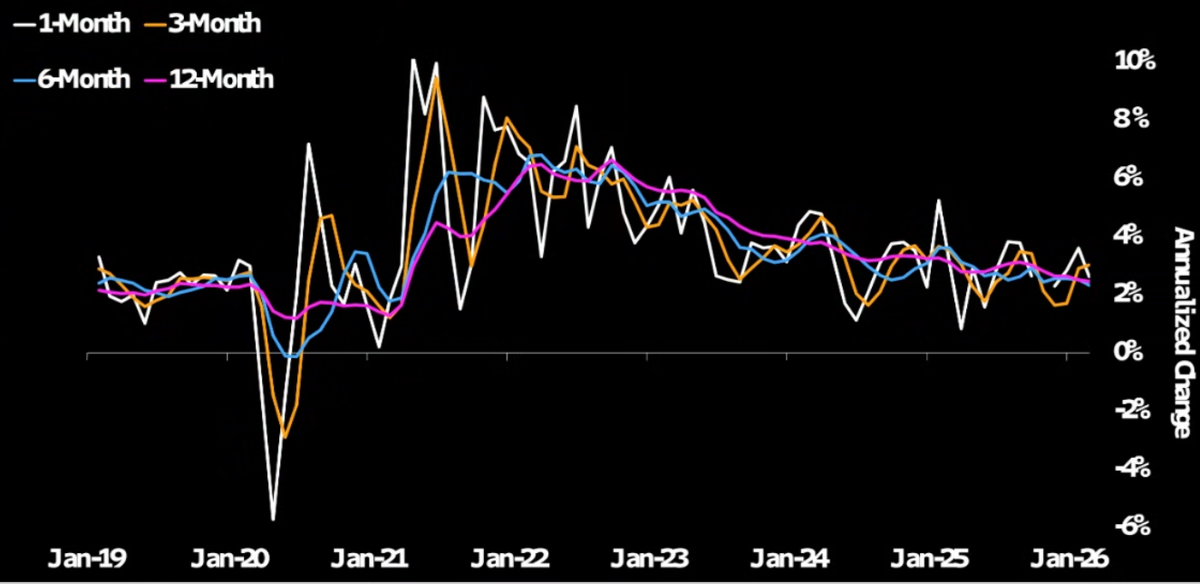
Source: Bloomberg, LLP | HISTORICAL CPI DATA SINCE JANUARY 2019
RCA Product & Pricing Update:
Product Spotlight: What We Are Seeing In The Rates & Derivatives Markets
The market is again facing tremendous uncertainty surrounding the path forward for interest rates. Borrowers should be as nimble as possible in this market environment. Cap purchasers should onboard as quickly as possible – there is no cost to onboard. It is important to be in a position to take advantage of market opportunities quickly and efficiently.
Given the uncertainty that still remains about forward rates, many clients are grappling with when or if to extend. This is a difficult question – our advice has been to monitor the market closely and be on-boarded and ready to trade, should the market move in your favor. We also advise borrowers to check the market pricing for extensions, similar to how you purchased the original cap. Market pricing discovery is a key component to any cap transaction – new caps, extensions or terminations.
There is an increasing interest in exploring interest rate swaps as a possible hedge alternative. IR Swaps lock in a synthetic fixed rate and do not require an upfront premium. Unlike an interest rate cap, swaps are secured derivatives, so the counterparty selection process is more challenging with a swap. There are also additional variables that factor into the decision to pursue an interest rate swap, or to unwind an existing swap. We are also seeing a dramatic increase in swap termination advisory requests recently, as clients contemplate refinancings. Lower rates have sparked refinancing activity, which in some cases necessitates unwinding an existing swap. Please let us know if you would like to learn more about interest rate swaps, or swap terminations.
We are still seeing some residual demand for interest rate floor indications – to offset high loan floors or simply to benefit from declining variable rates. Borrowers who have “floors” embedded in their loans have been considering purchasing a separate, stand-alone interest rate floor to offset the loan floor.
Interest Rate Cap Hub: Pricing & Volatility Update for 3/11/2026
Cap premiums continue to rise due to higher SOFR swap rates and volatility
Rate volatility has ticked higher due to the Middle East conflict
Current 1-Month Term SOFR = 3.67646% (Prior day: 3.66996%)
Pricing Matrix:1-Week Movement In 1-Month Term SOFR Cap Premiums
Notional Amount | Tenor | Strike Rate | ~Premium 3/4/26 | ~Premium 3/11/26* |
$25,000,000 | 1-Year | 3.50% | ~$68k | ~$70k |
$25,000,000 | 1-Year | 4.50% | ~$19k | ~$19k |
$25,000,000 | 2-Year | 3.50% | ~$139k | ~$147k |
$25,000,000 | 2-year | 4.50% | ~$28k | ~$33k |
$25,000,000 | 3-Year | 3.50% | ~$240k | ~$255k |
$25,000,000 | 3-Year | 4.50% | ~$78k | ~$88k |
*Indications as of market open. Premium levels provided are indications only and subject to change.
Please contact us if you would like to discuss an upcoming rate cap or rate cap extension, explore ways to reduce or eliminate escrow deposits for replacement caps or learn more about interest rate Caps, Floors, Swaps or Swaptions. RCA can also assist you with the voluntary early termination of your cap or swap.
HedgeWithAnEdge-TheRCAEdge!

Disclaimer: The information provided in this communication is intended for discussion purposes only. Nothing presented in this communication should be taken as a recommendation or forecast. All market data shown is indicative only and subject to change depending on current market conditions. The information in this publication is confidential and is intended for the recipient only.